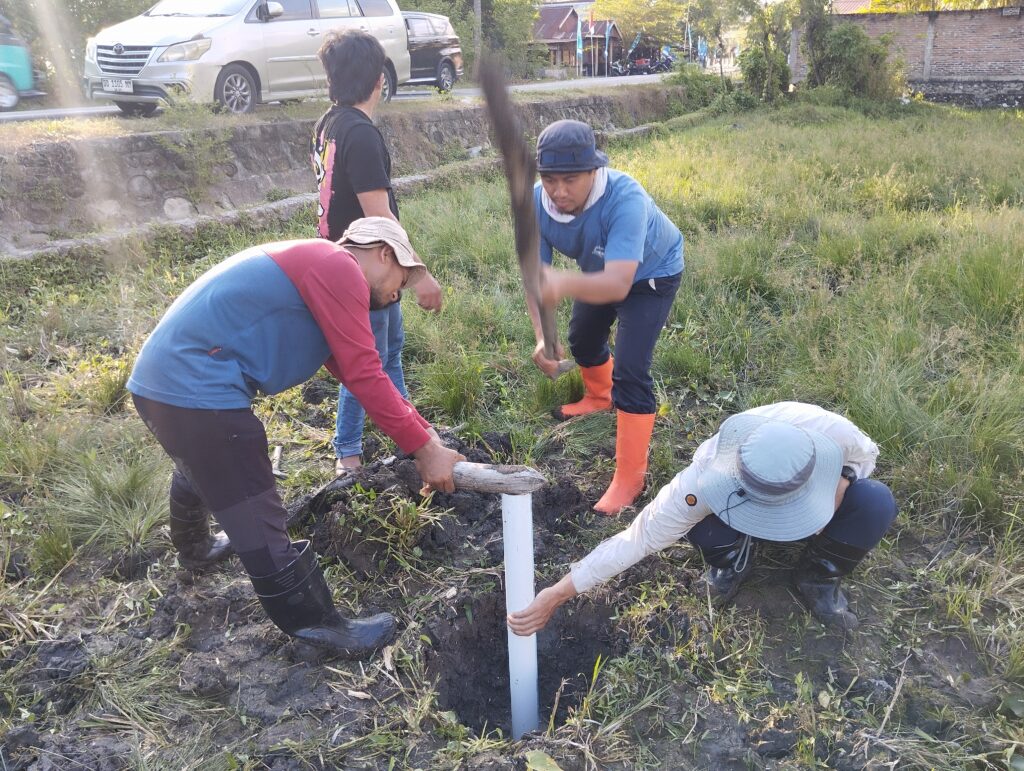

27.07.2025 AGU Conference in Singapore
The PI co-hosted a Geohazards reseach session entitled: „Interdisciplinary research on coastal hazards: Advancement in perspectives, techniques and applications” and presented Paleosuma research results at the Asia Oceania Geosciences Society annual meeting in Singapore.
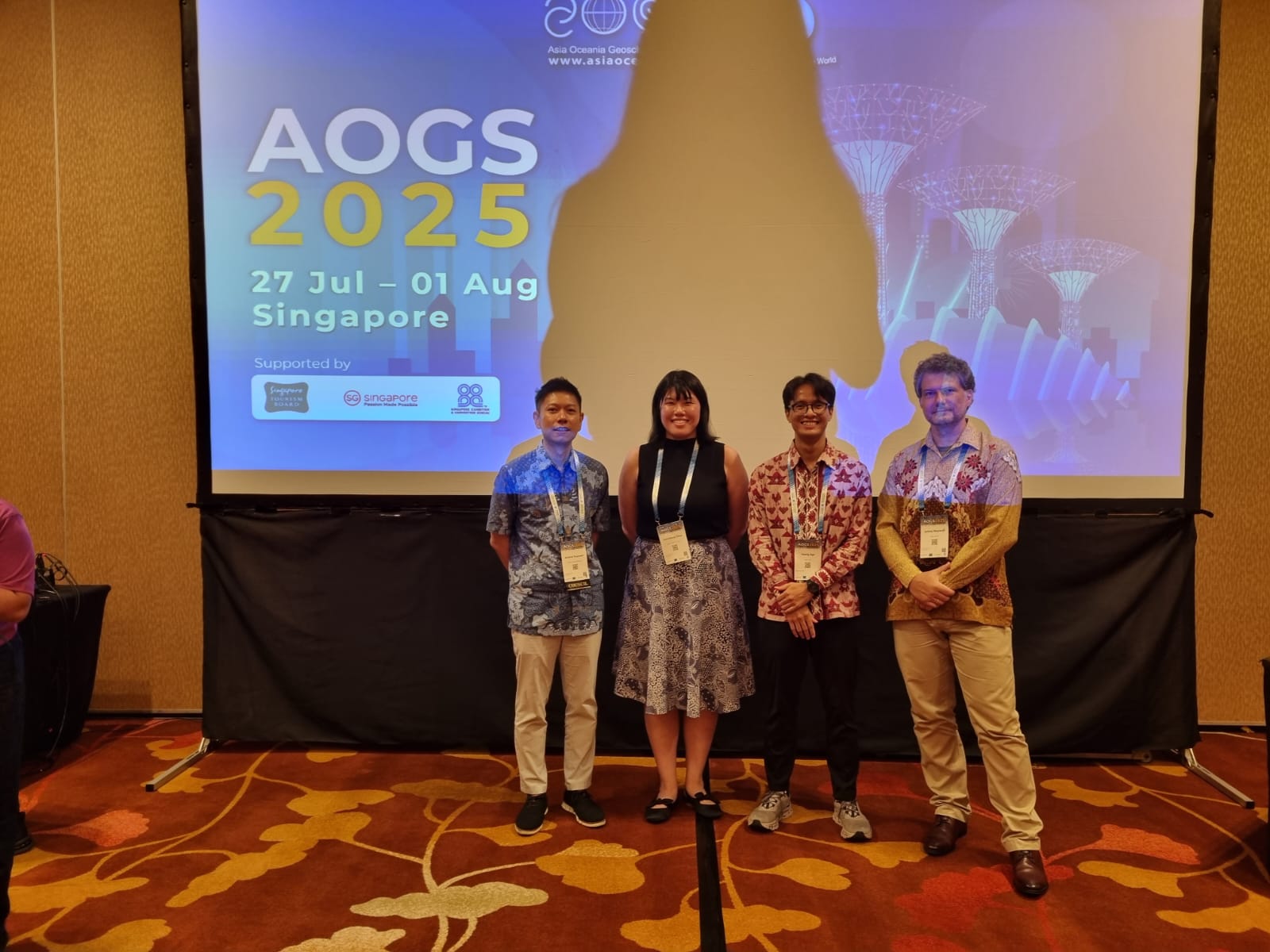
27.04.2025 European Geoscience Conference
The PI presented Paleosuma results at EGU the main european Earth Sciences Conference in Vienna. 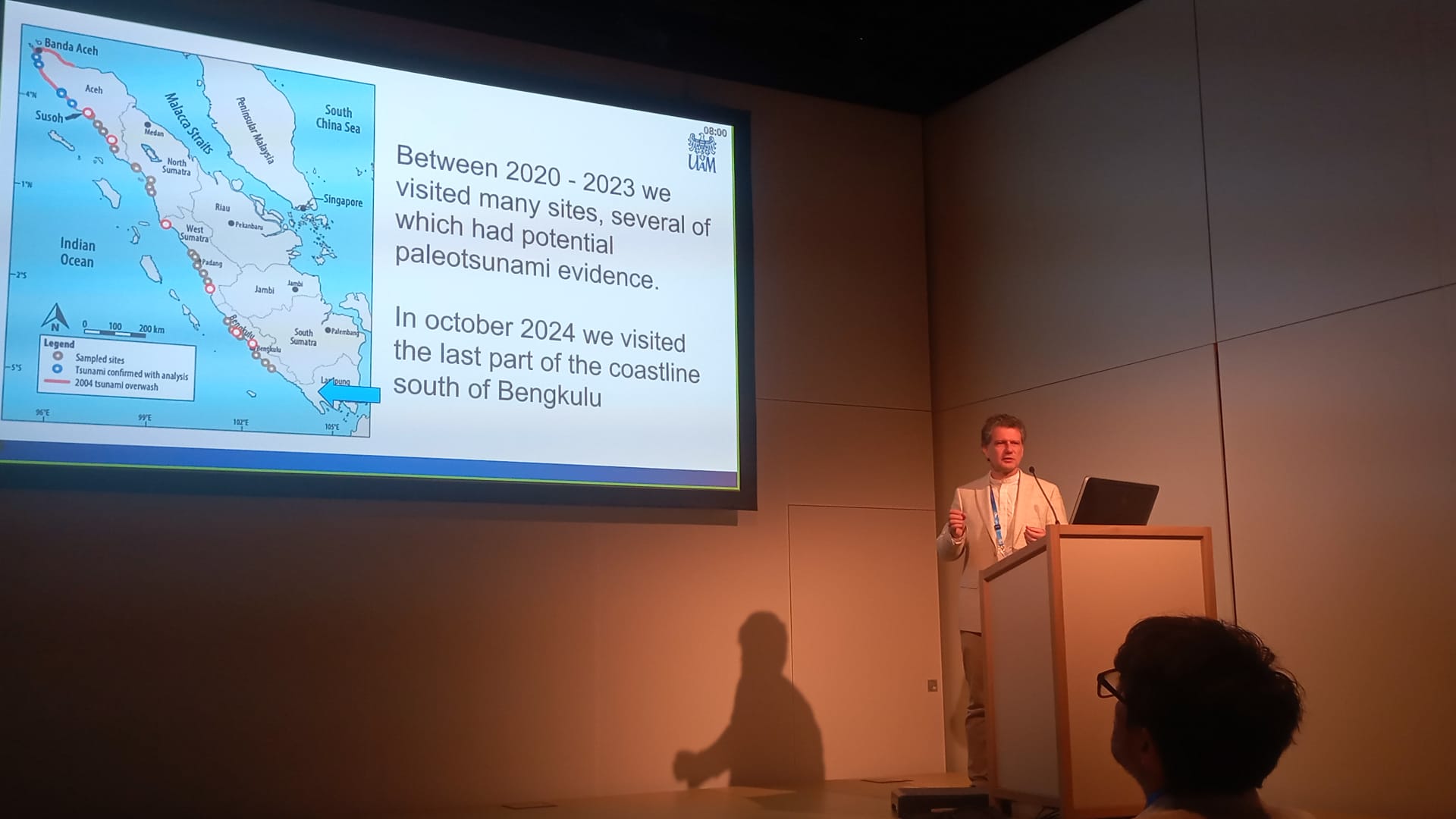
24-25.04.2025 GeoRAM Workshop in Gułtowy, Poland
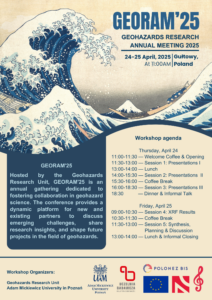
The project organised a small workshop near Poznań for friends and collaborators of the Paleosuma project to discuss paleotsunami and geohazard work in general. The workshop welcomed both local collaborators from Poznań and those from as far away as Singapore and took the opportunity to also show off the Morasko Meteorite impact site.

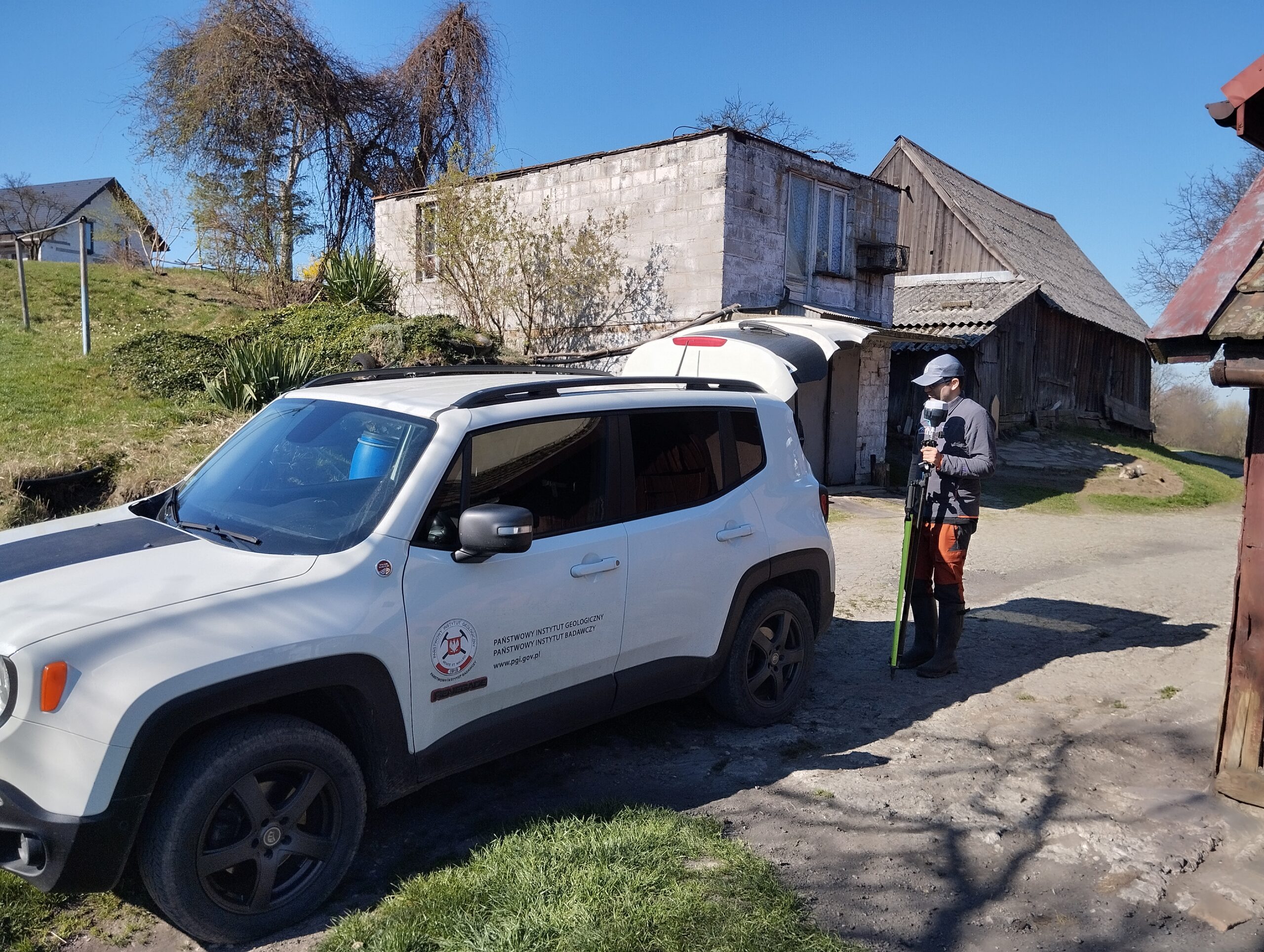
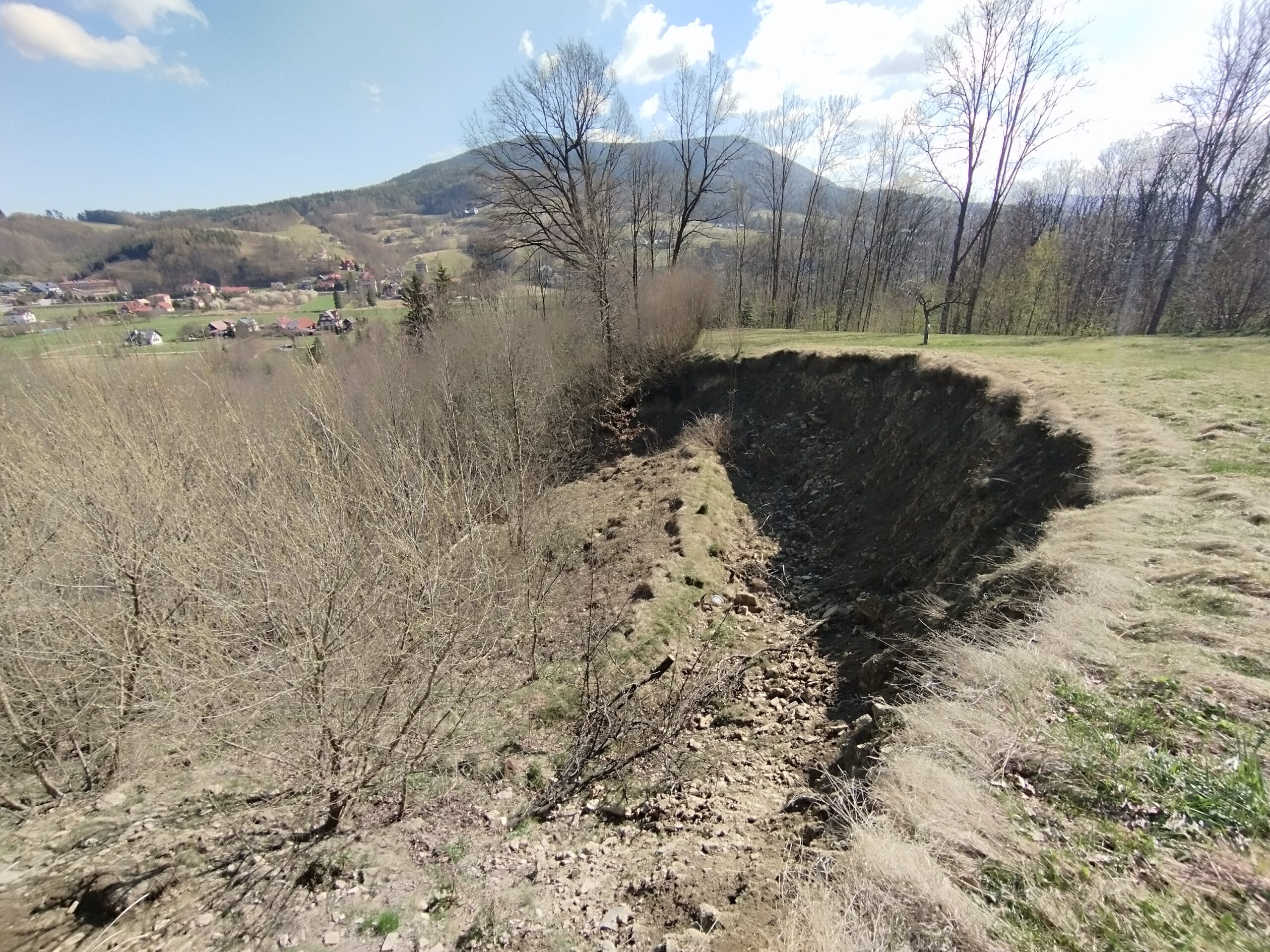
March/April 2025 Secondment with a very friendly crew at the Polish Geological Institute Geohazards Center, in Kraków, to learn more about landslides and sinkholes which cause significant financial losses in the south of Poland. 
28.11.2024 Interview for Science in Poland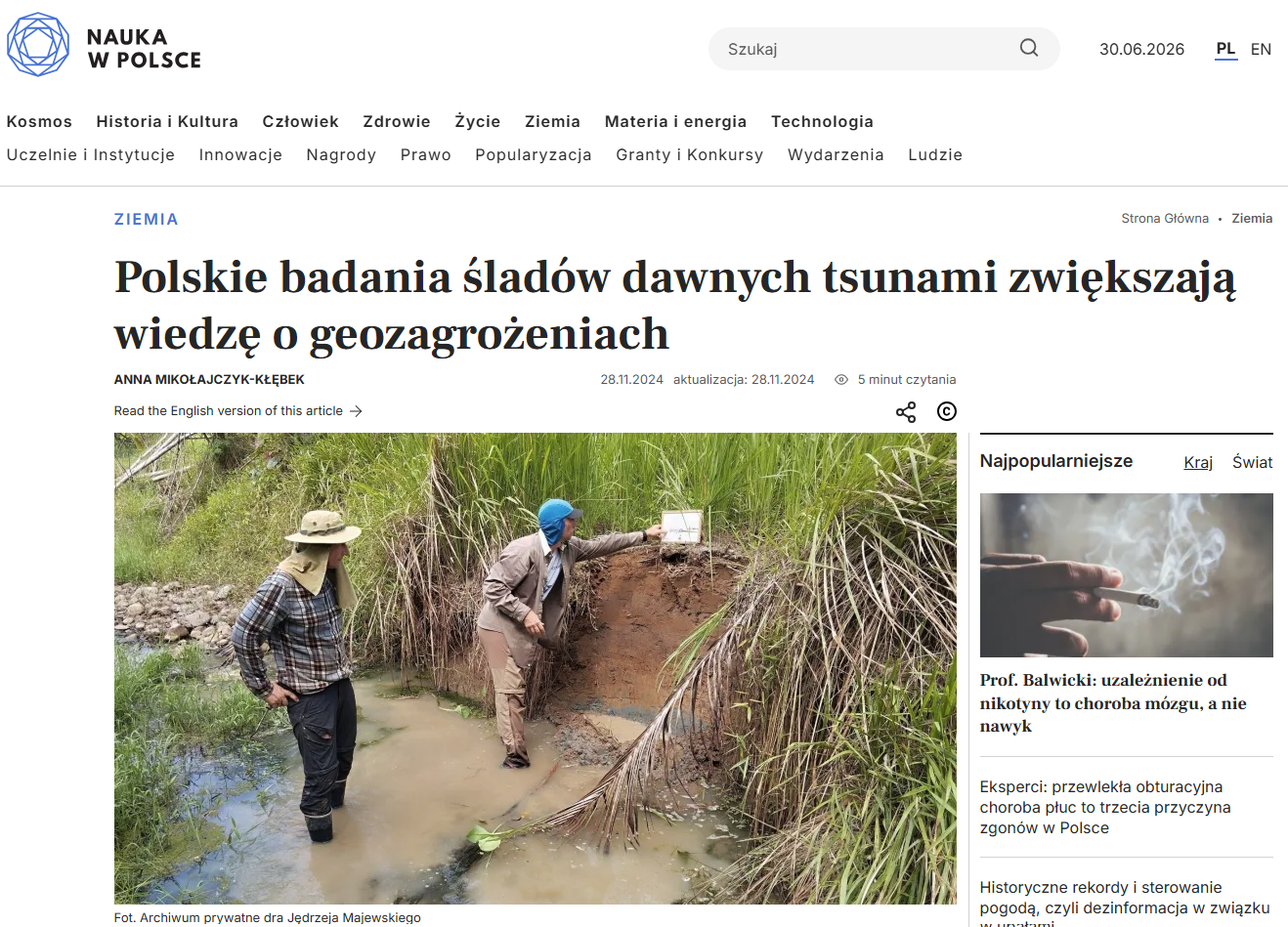 The PI gave an interview to one of the biggest Polish Scientific Outreach platforms „Nauka w Polsce” about the project’s research and the recent fieldwork. The article has since been cited by several other popular science media.
https://naukawpolsce.pl/aktualnosci/news%2C105593%2Cpolskie-badania-sladow-dawnych-tsunami-zwiekszaja-wiedze-o-geozagrozeniach
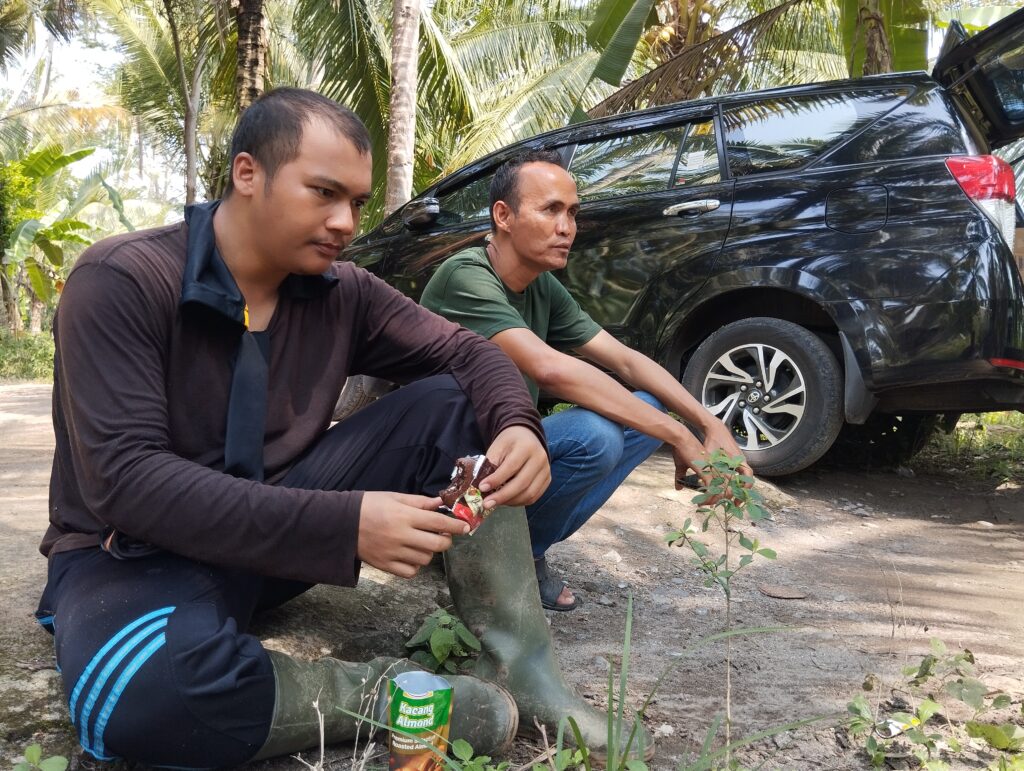


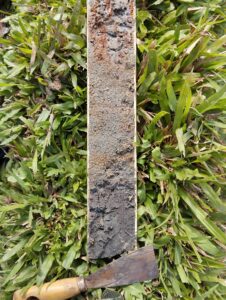


06.11 to 18.11.2024 Presentation at AIWEST-DR 2024 conference and Lectures at Syiah Kuala University in Banda Aceh, Indonesia
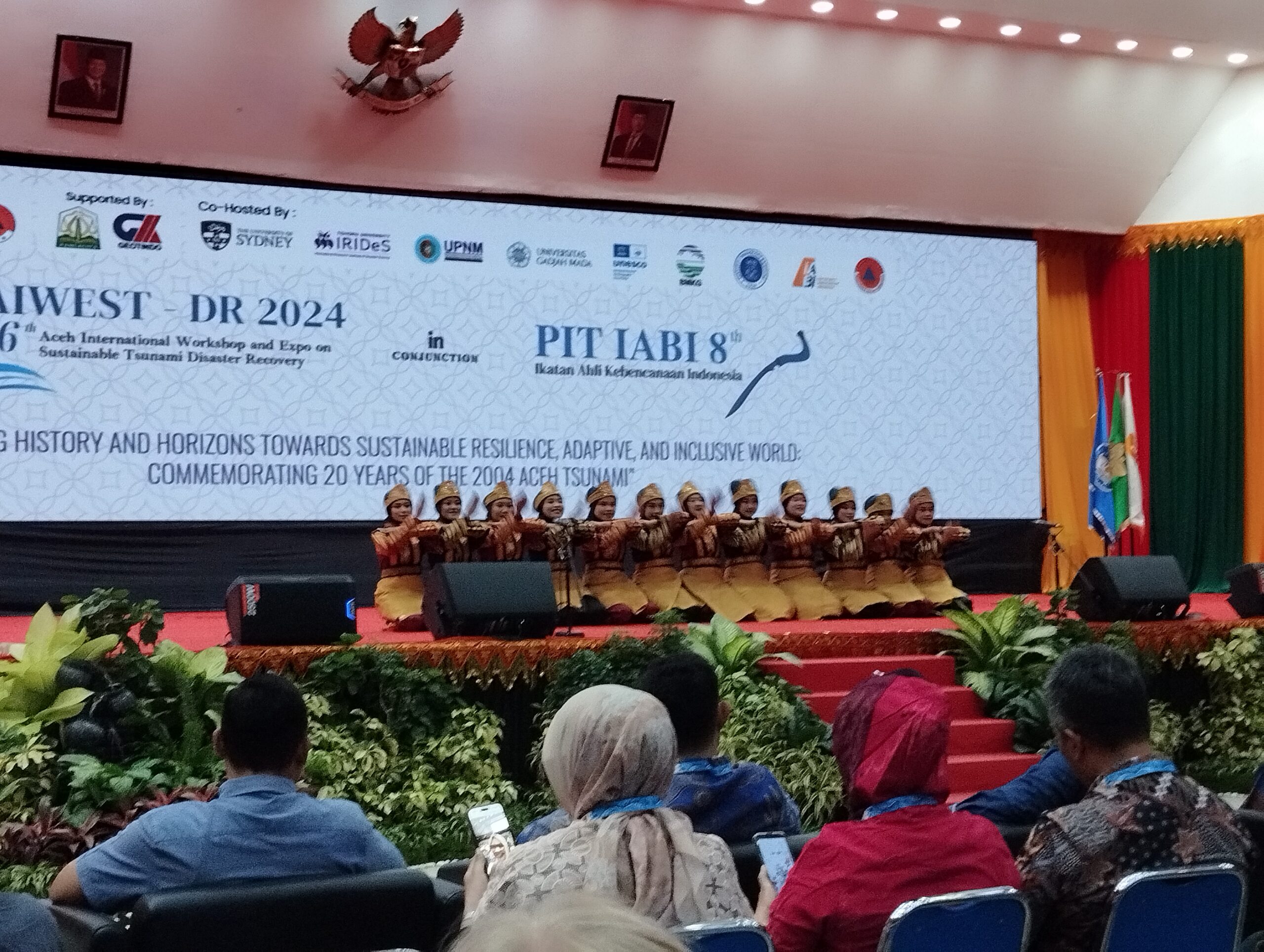 The Principal Investigator presented the scientific results of the project at the annual AIWEST conference in Banda Aceh, Indonesia, on the 20th anniversary of the 2004 Indian Ocean Tsunami.
The PI also visited the Syiah Kuala University and gave two lectures on sedimentology for Geology and Geophysics students and Paleotsunami research in the Physics department for geophysics students.
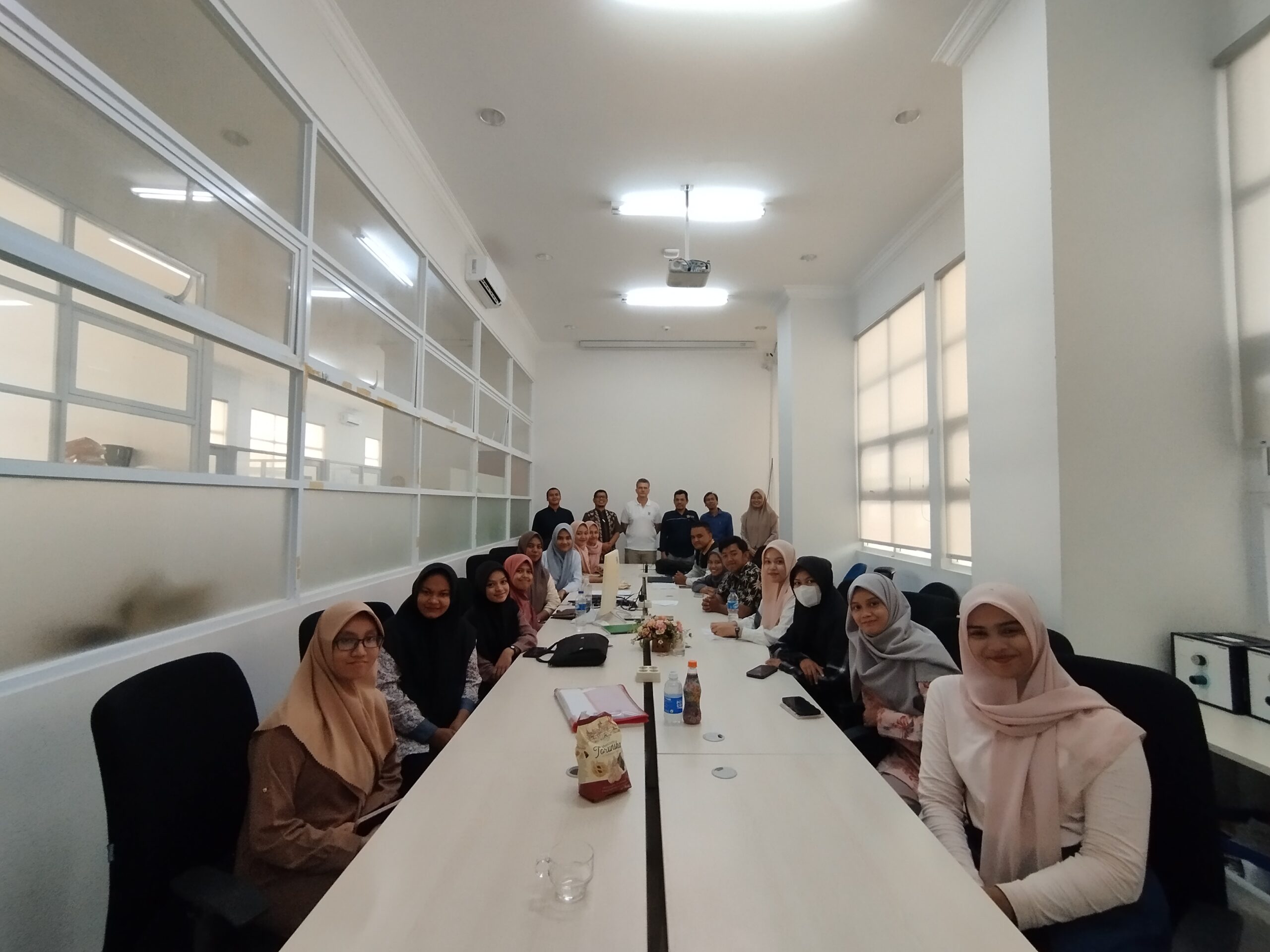
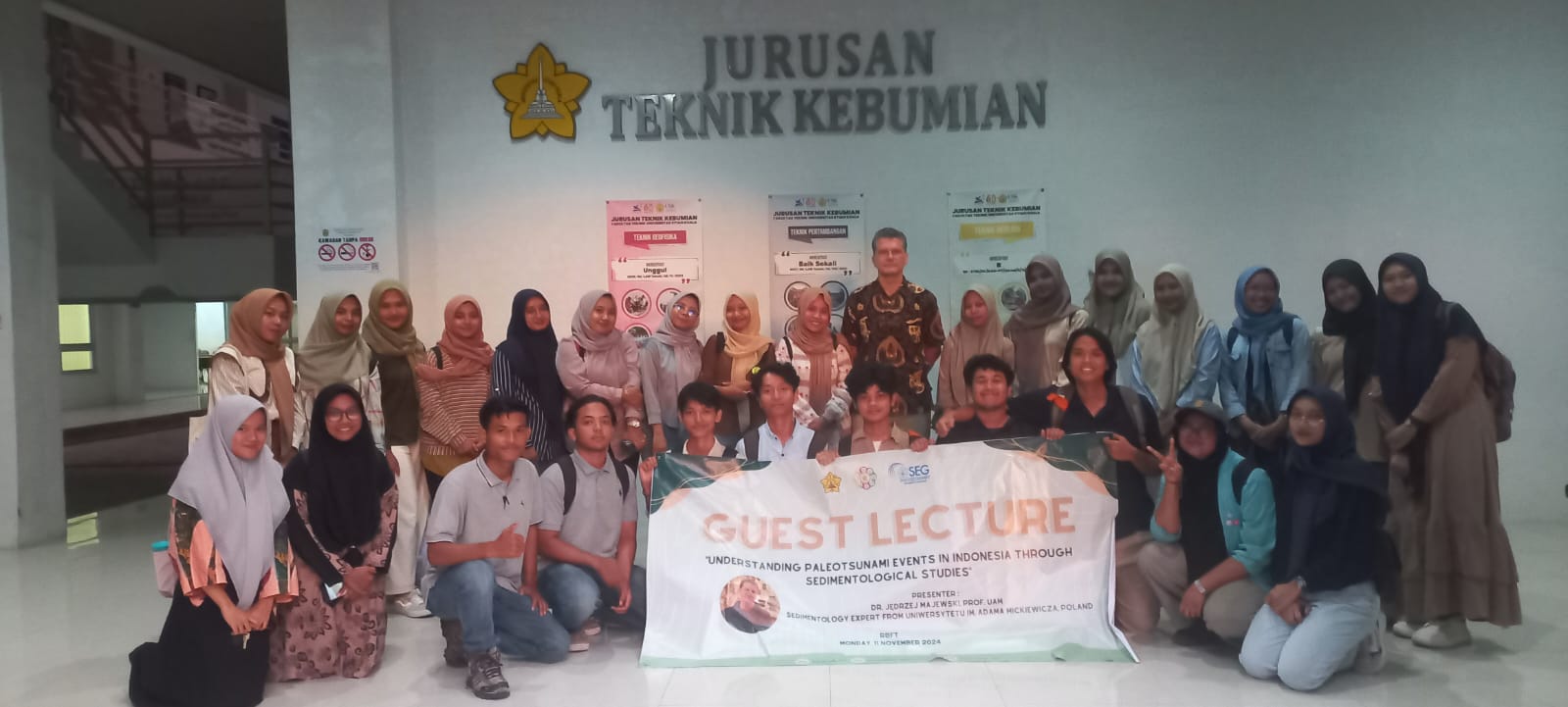
Post official program the PI also discussed the continued collaboration with Unsyiah staff and students, including the project’s main collaborator in Banda Aceh Prof. Nazli Ismail. 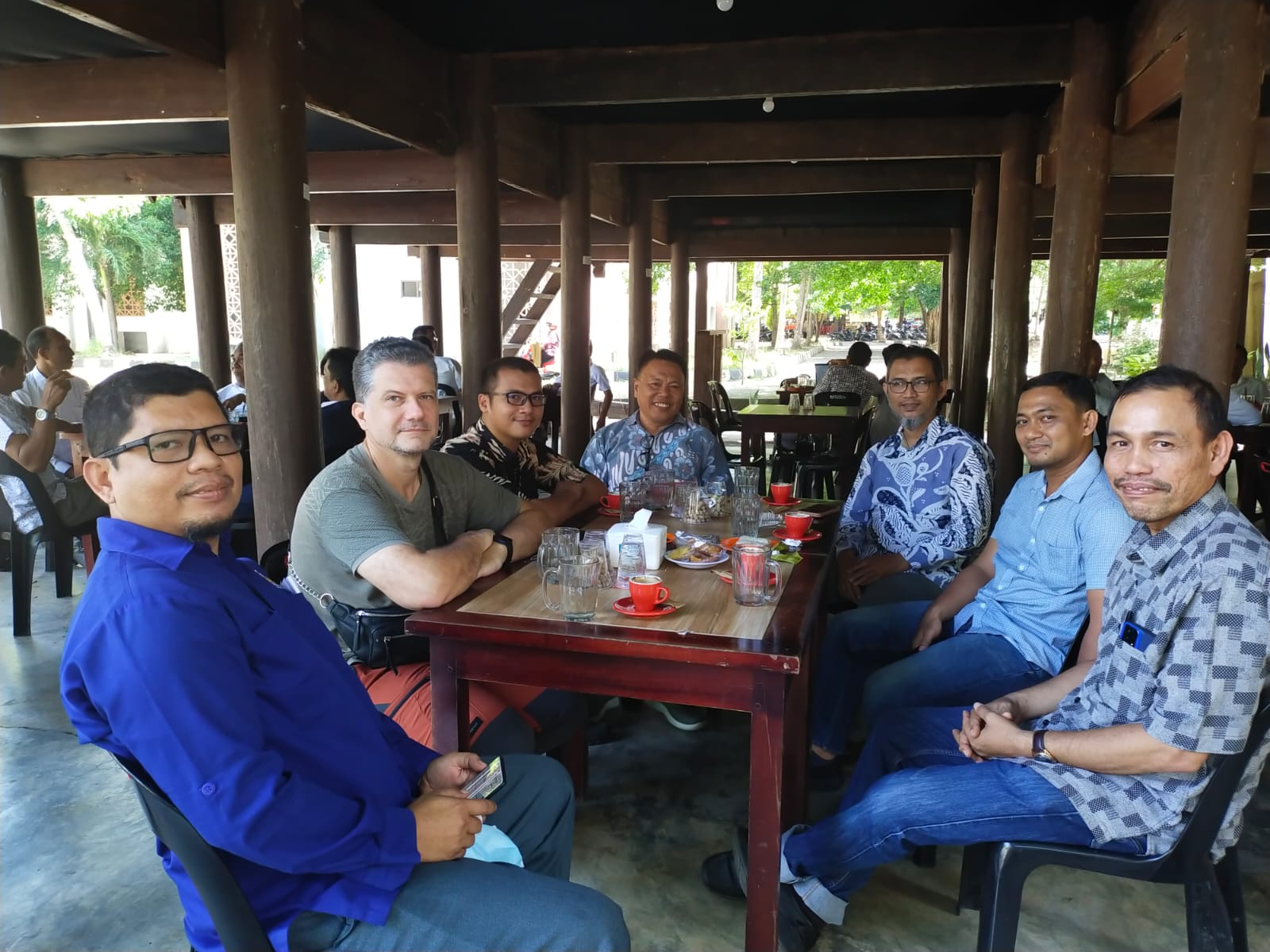
28.02.2024 Public lecture on Tsunamis (in Polish)
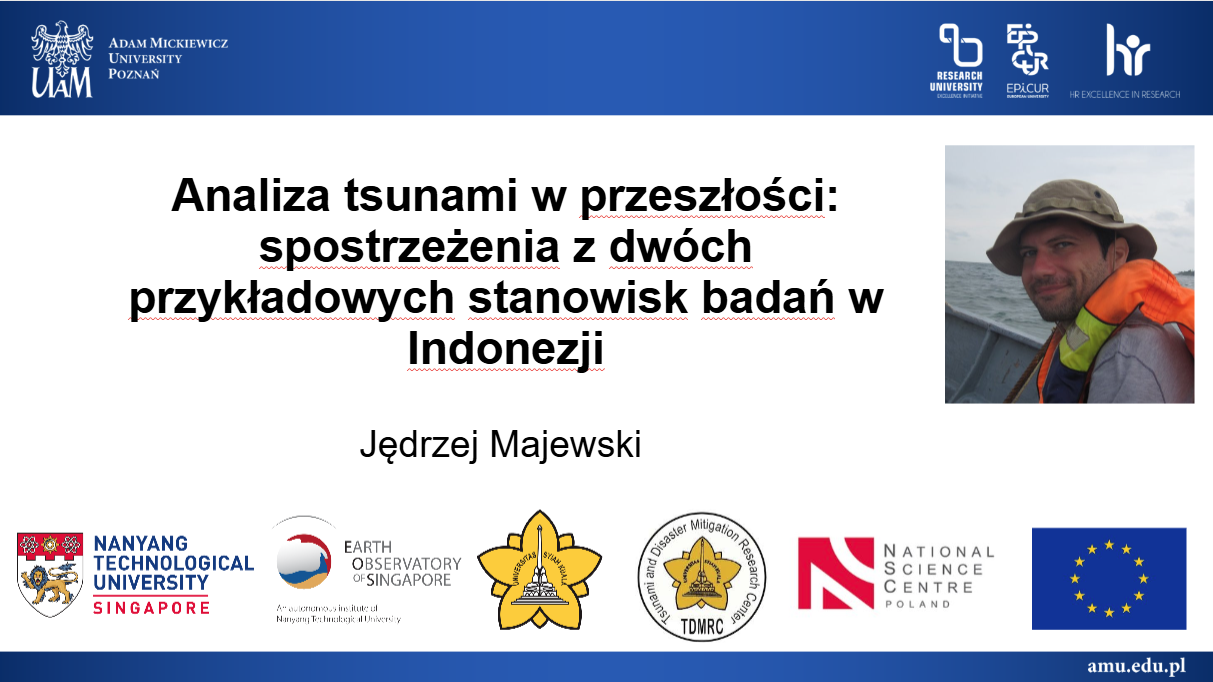
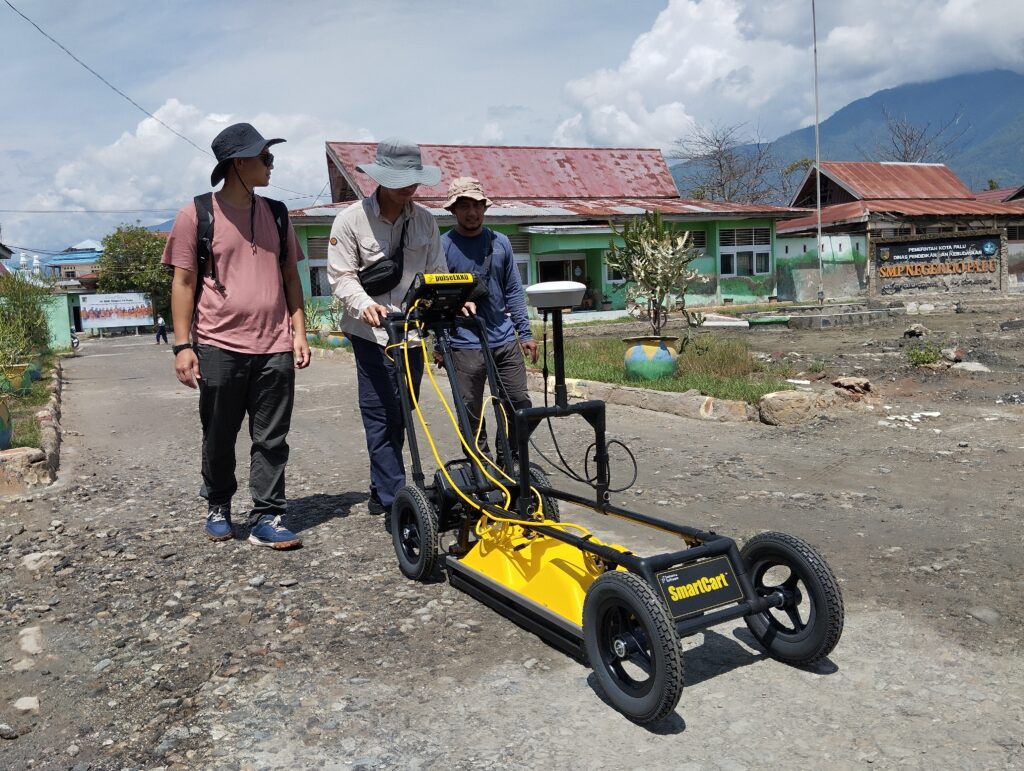
The principle Investigator delivered a talk entitled: „Analiza tsunami w przeszłości: spostrzeżenia z dwóchprzykładowychstanowiskbadań w Indonezji” to an audience of students faculty, members of the Polish Geological Society and open to public. The talk covered the PI’s experiences with excavation on sites affected by unamed ancient tsunamis in Aceh province, near Susoh, and the tragic 2018 Palu Donggala Tsunami in Palu Bay.
18.01.2024 Online Seminar for the Asia Oceania Geoscience Society (AOGS) Regional Advisory Committee for Coastal Zone Risk Mitigation and Management.
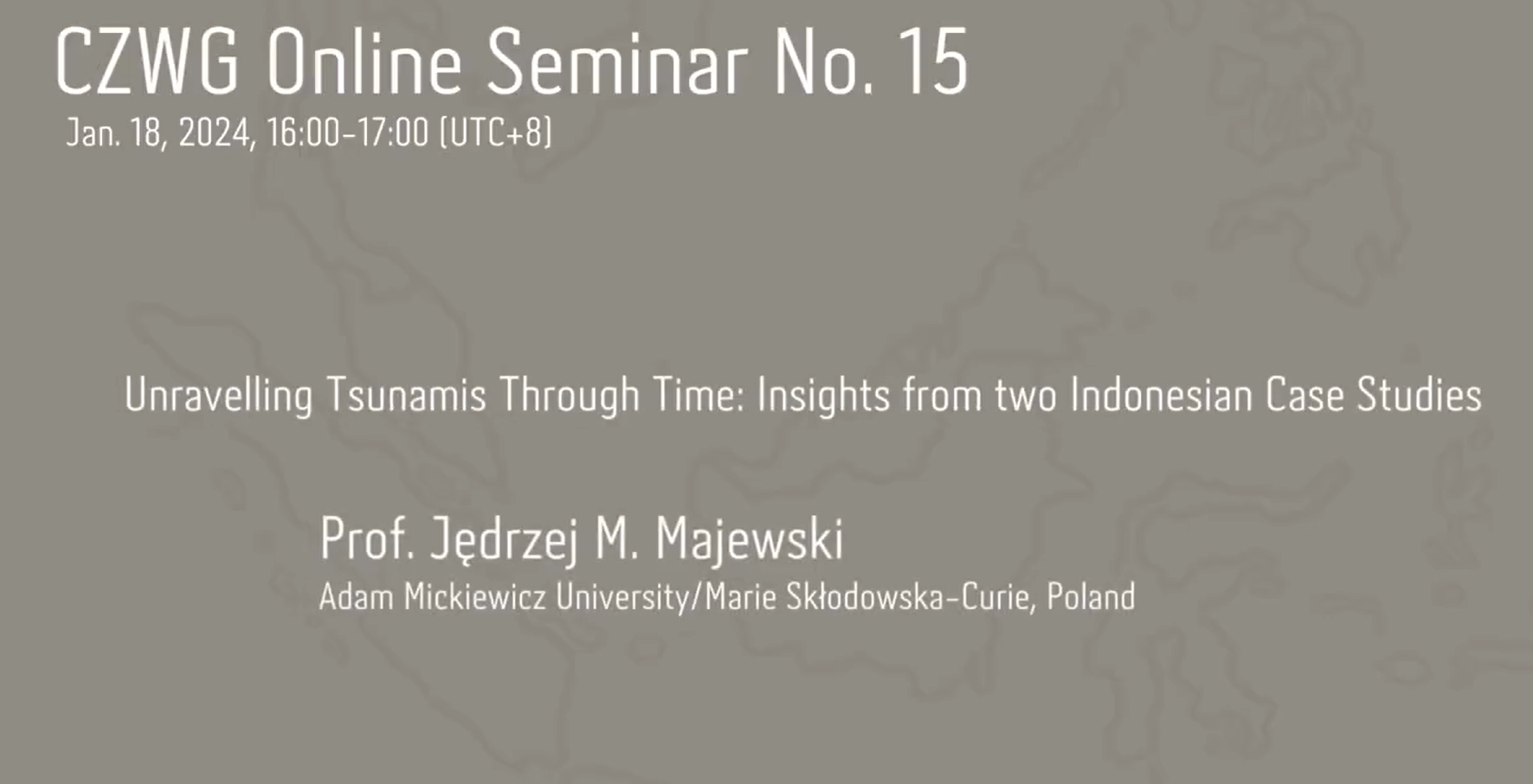
The Principal Investigator delivered a research talk entitled „Uraveling Tsunamis Through Time: Insights from two Indonesian Case studies.” A recording of the lecture is available online at the AOGS-RAC Youtube Channel at the following link:
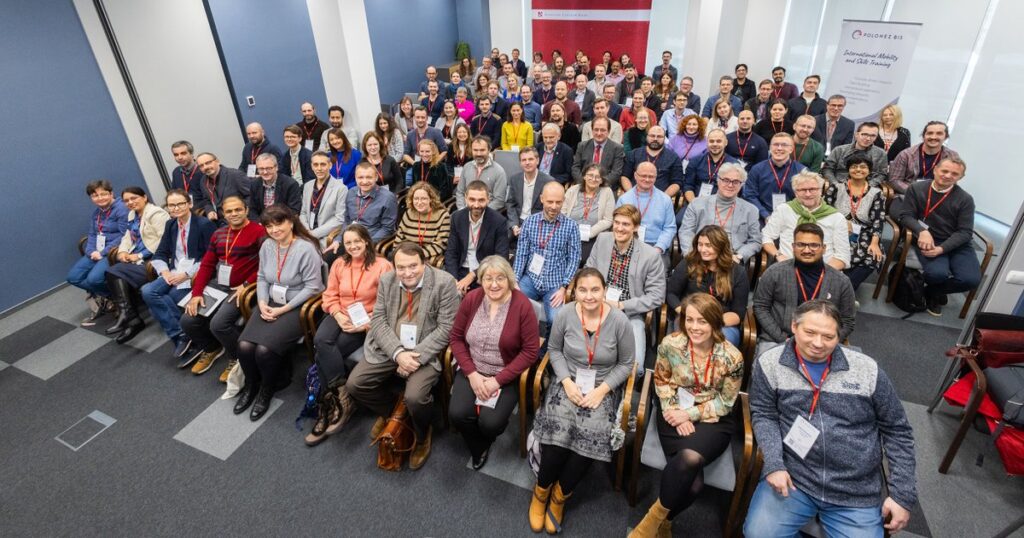
30.11.2023 – 01.12.2023 Principle Investigator and Mentor attended a kick-off meeting at the National Science Centre (NCN) in Kraków